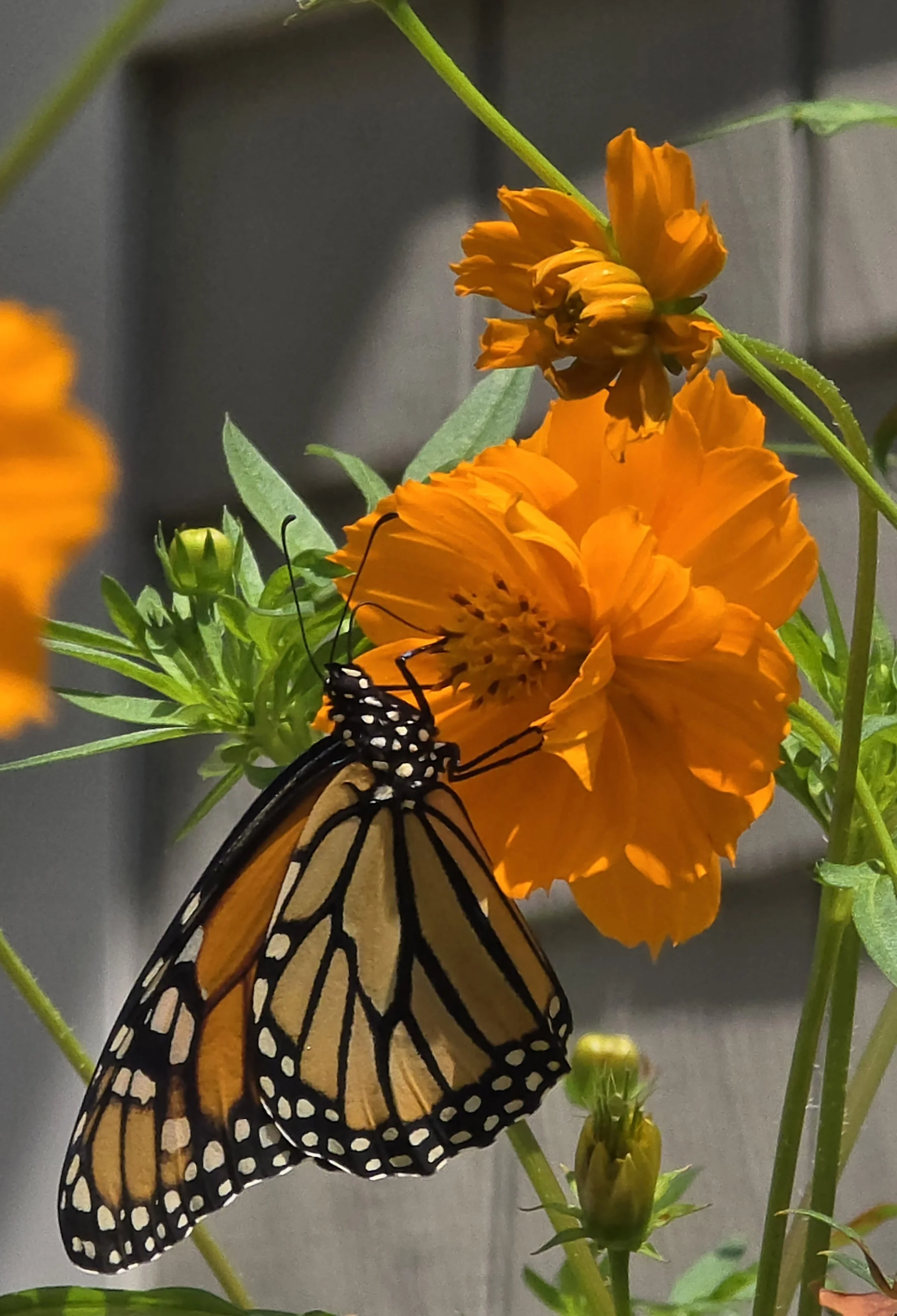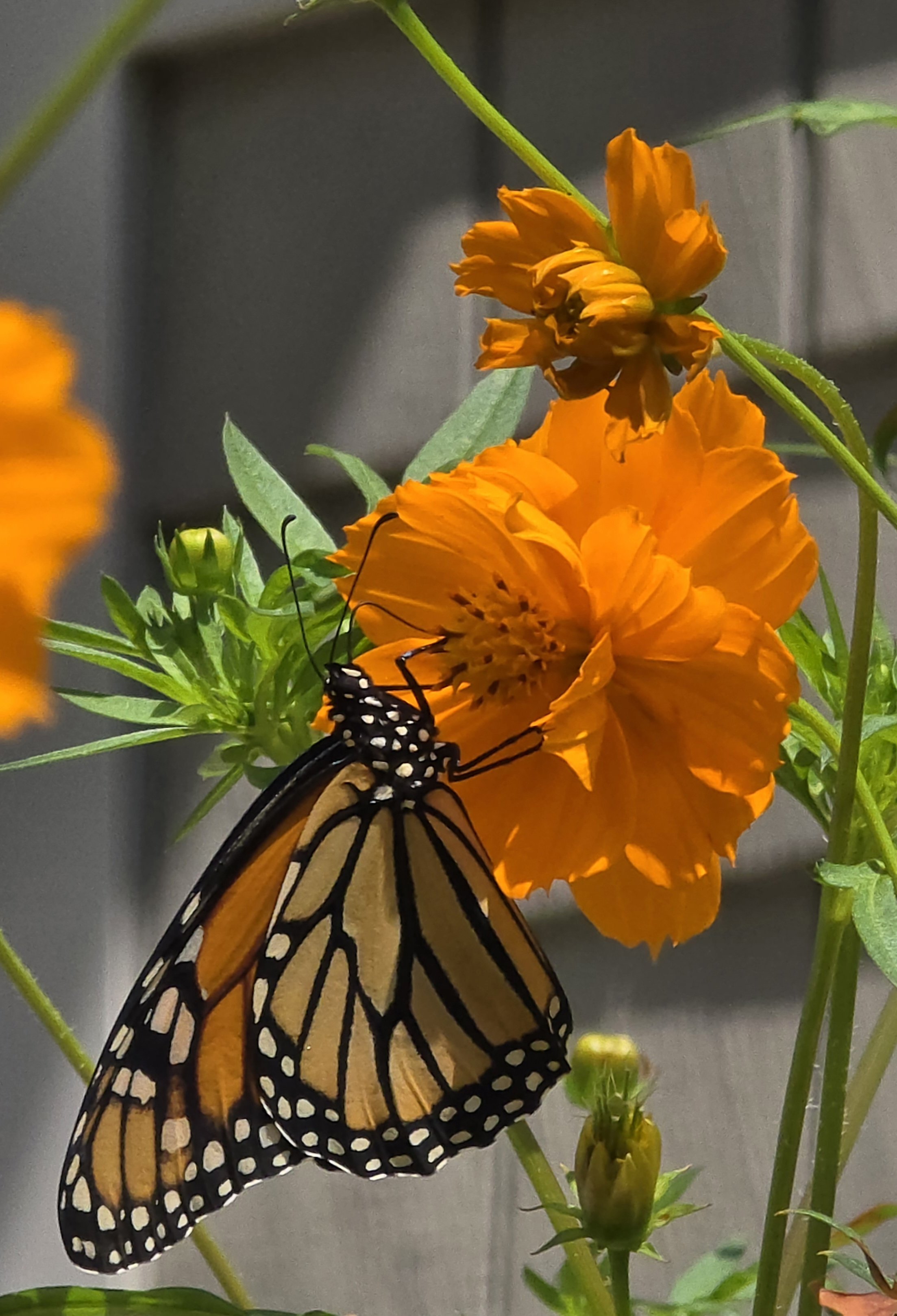
Adult Monarch butterfly & Orange Cosmos blossom
Helping Butterflies Through the Seasons
As a symbol of transformation, butterflies seem like a wonderful type of animal to encourage and support on our Williamsburg UU grounds. The WUU Green Team is proud to say that we’ve done exactly that over the course of the last year.
Last spring, the WUU Green Team decided to transform a corner of the playground into a new garden for pollinators. We’ve dubbed it the “Pollinator Patch.” It’s not a large space, but it’s been having an outsized impact.
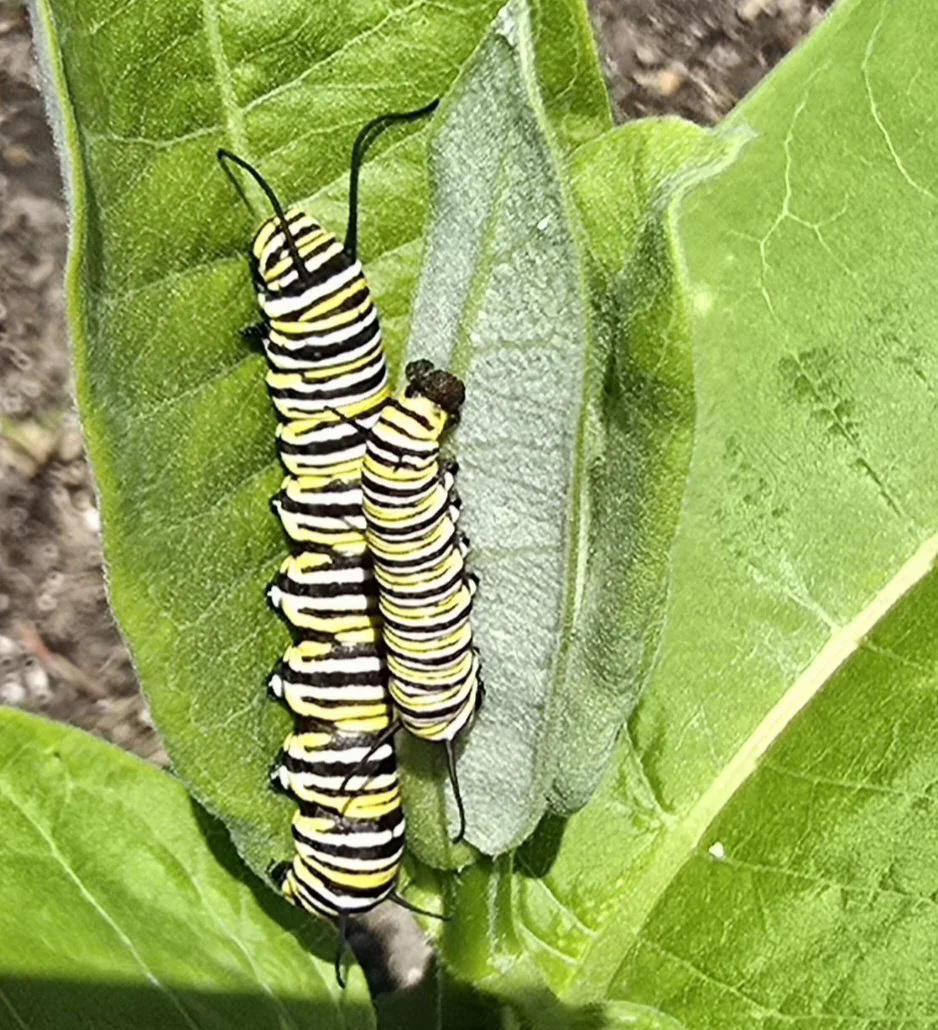
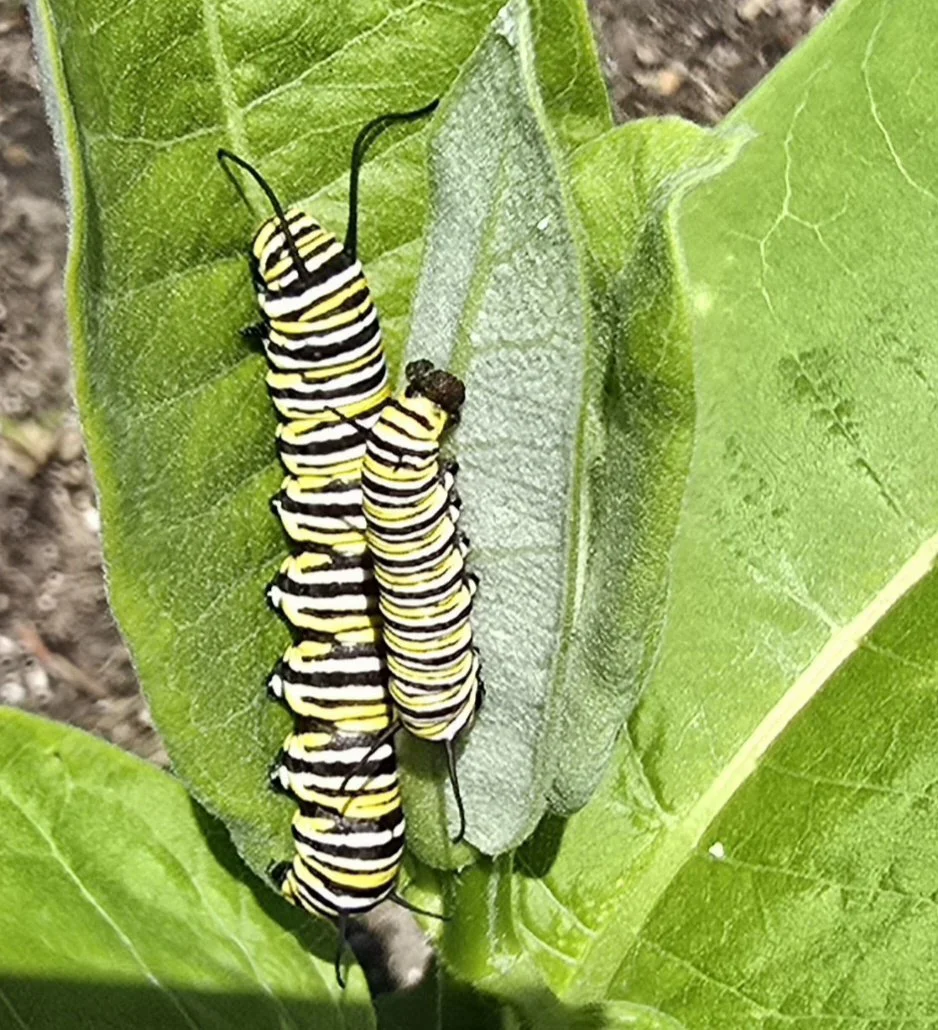
Two Monarch caterpillars & Common Milkweed
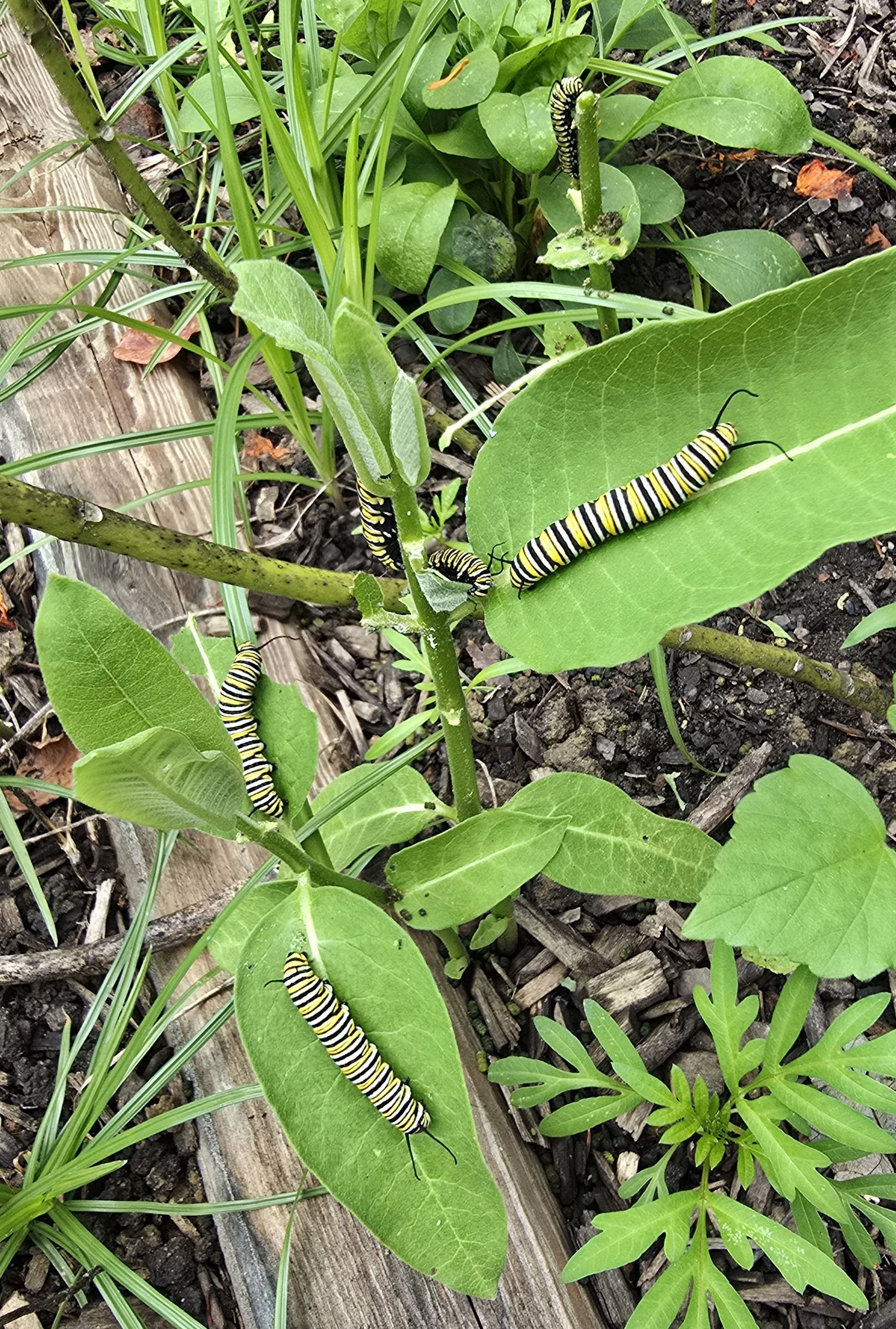
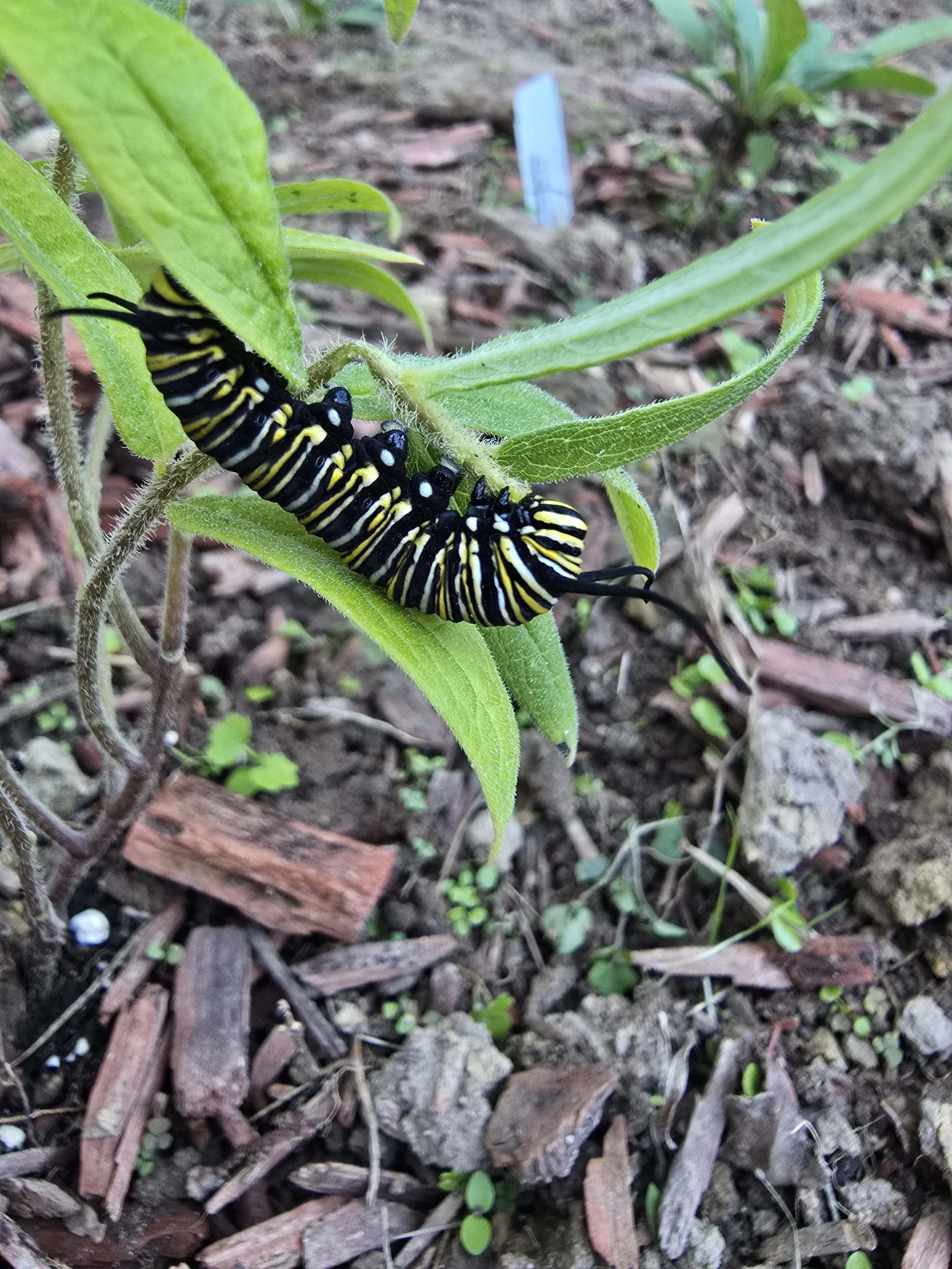
We knew we wanted to support Monarch butterflies on campus, so basically our first step in starting this garden was to order small “plugs” of Swamp Milkweed, one of their host plants. Imagine our excitement when we saw sprouts of another great milkweed, Common Milkweed, coming up in the space a few weeks later! Even before the small, new Swamp Milkweed plants arrived, we had monarch eggs - and then caterpillars - living on our newly emerging Common Milkweed!
As wonderful as milkweed is, though, we knew we needed a wider variety of plants than just those 2 species to make a successful pollinator garden. So a bit later in the spring, we added Eared Coreopsis, Purple Coneflower, Blue False Indigo, Black-eyed Susan, Obedient Plant, Spotted Beebalm, Swamp Sunflower, Woodland Sunflower, Cutleaf Coneflower, and a small white fall Aster. When Sulfur Cosmos started coming up from prior plantings in the area, we let them grow, too. They’re native to Mexico, not here, but they gave us some great color during this first year of our garden’s establishment.
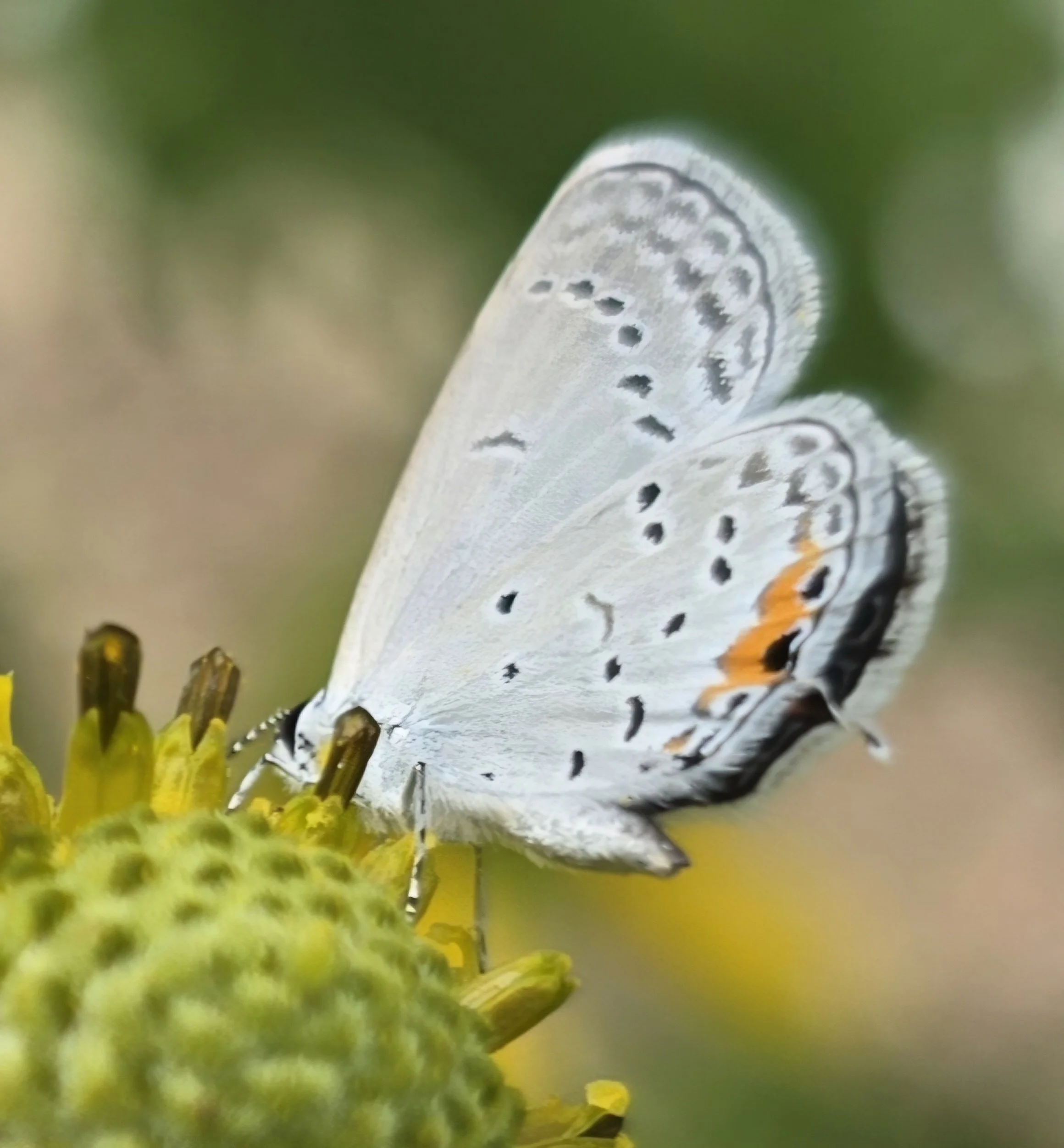
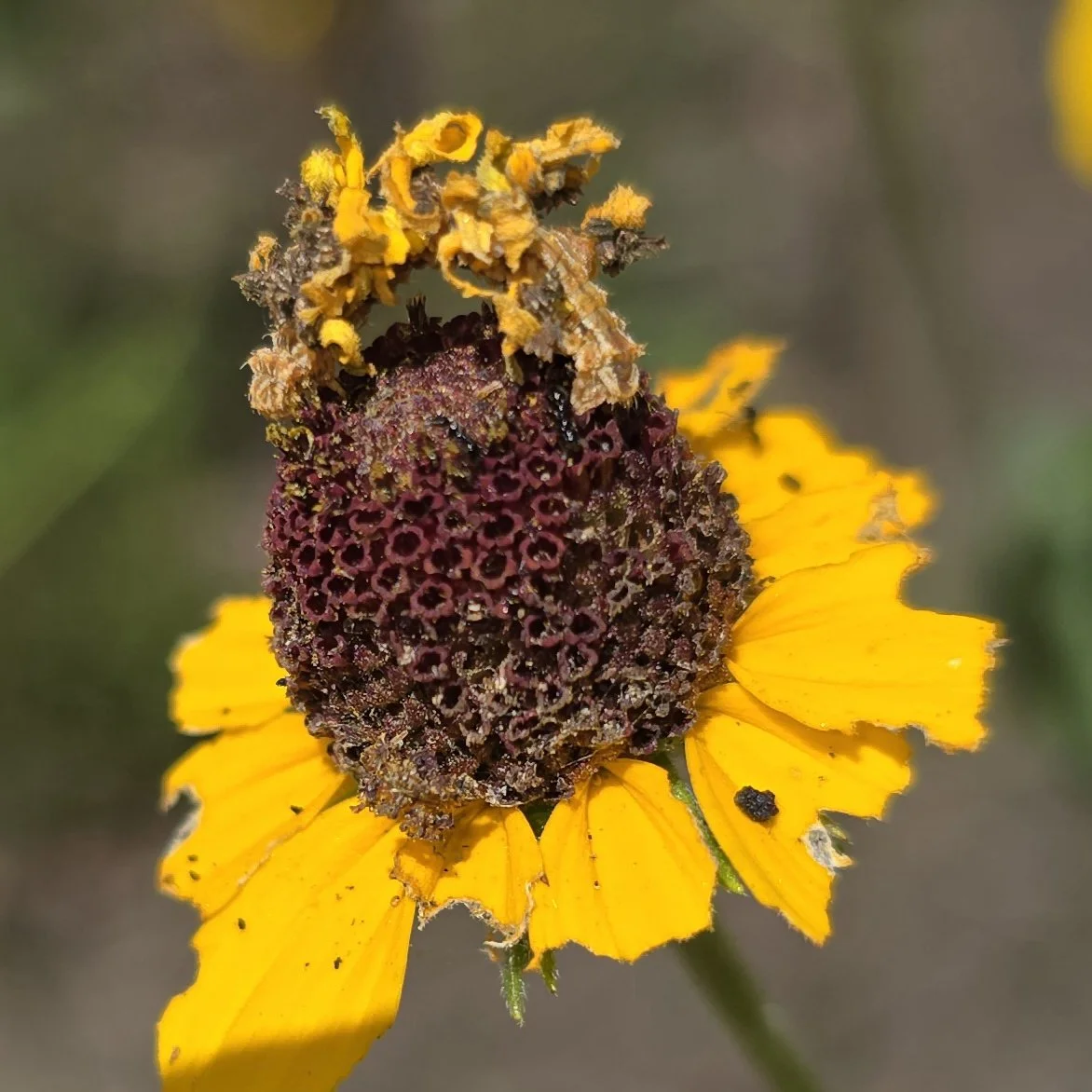
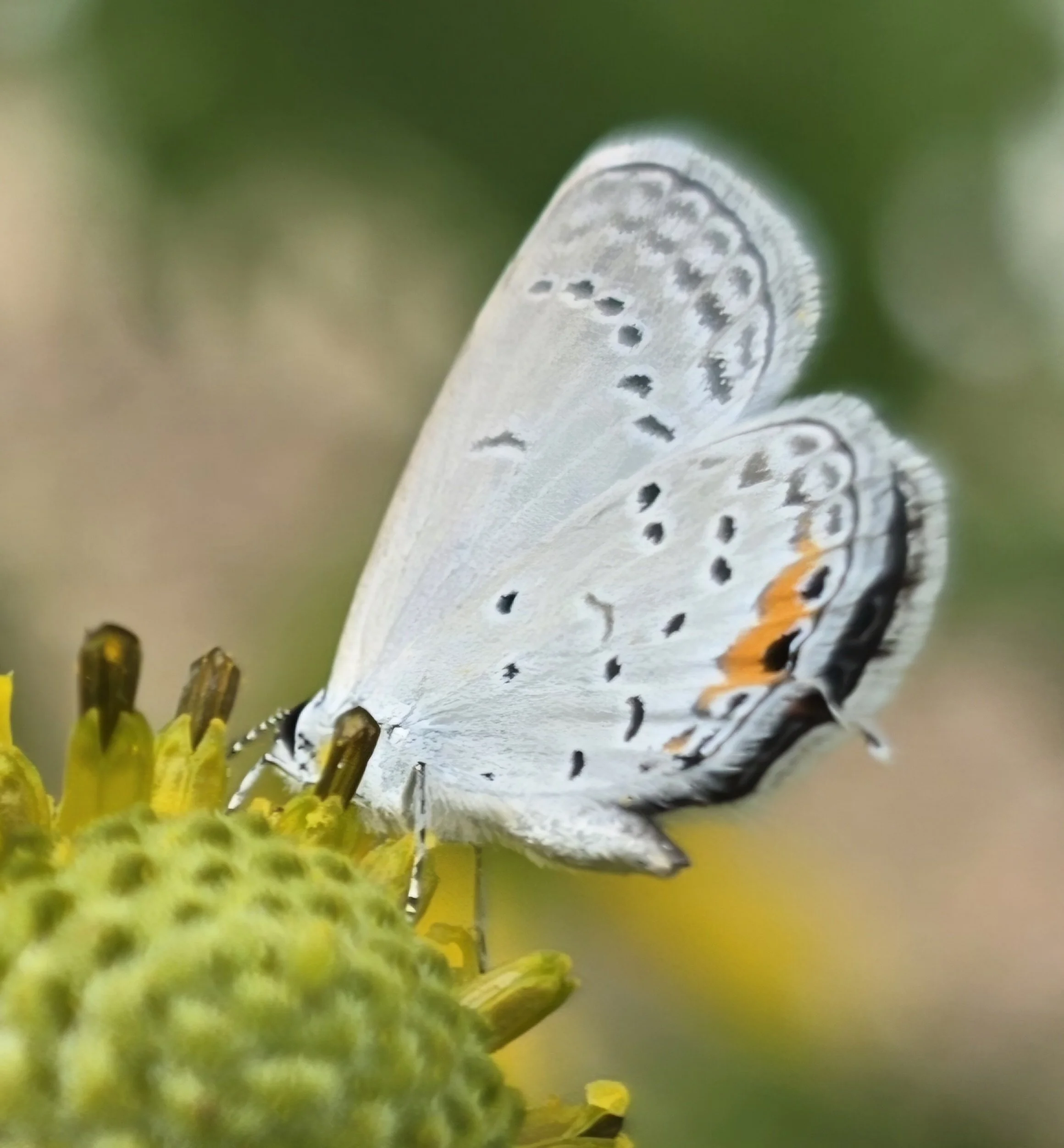
Eastern-tailed Blue & Cutleaf Coneflower
It takes a year or two for perennials to really get established, but even with a “baby garden,” we’ve had great success. We counted well over 100 Monarch caterpillars growing throughout the summer. There were so many that by late summer, they’d stripped off all the leaves of the milkweed plants and we chose to move about 50 of them off site to milkweed growing in other locations.
Besides the Monarch caterpillars, we also had two other species of caterpillars: the beautiful green ones of Sleepy Orange butterflies, which appeared on a weedy Senna in the garden, and the cute little camouflaged loopers of Wavy-lined Emerald moths on the blooms of the Black-eyed Susans.
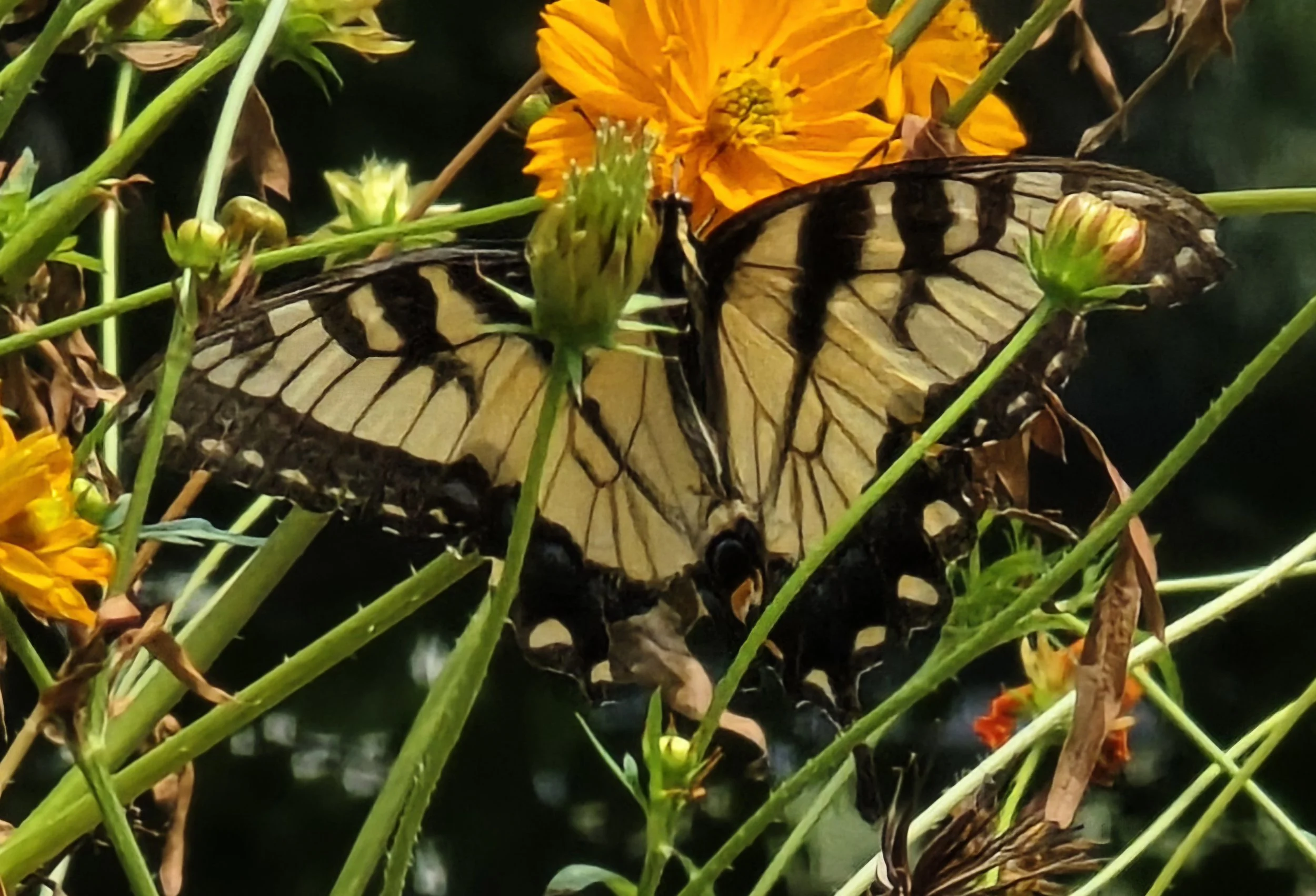
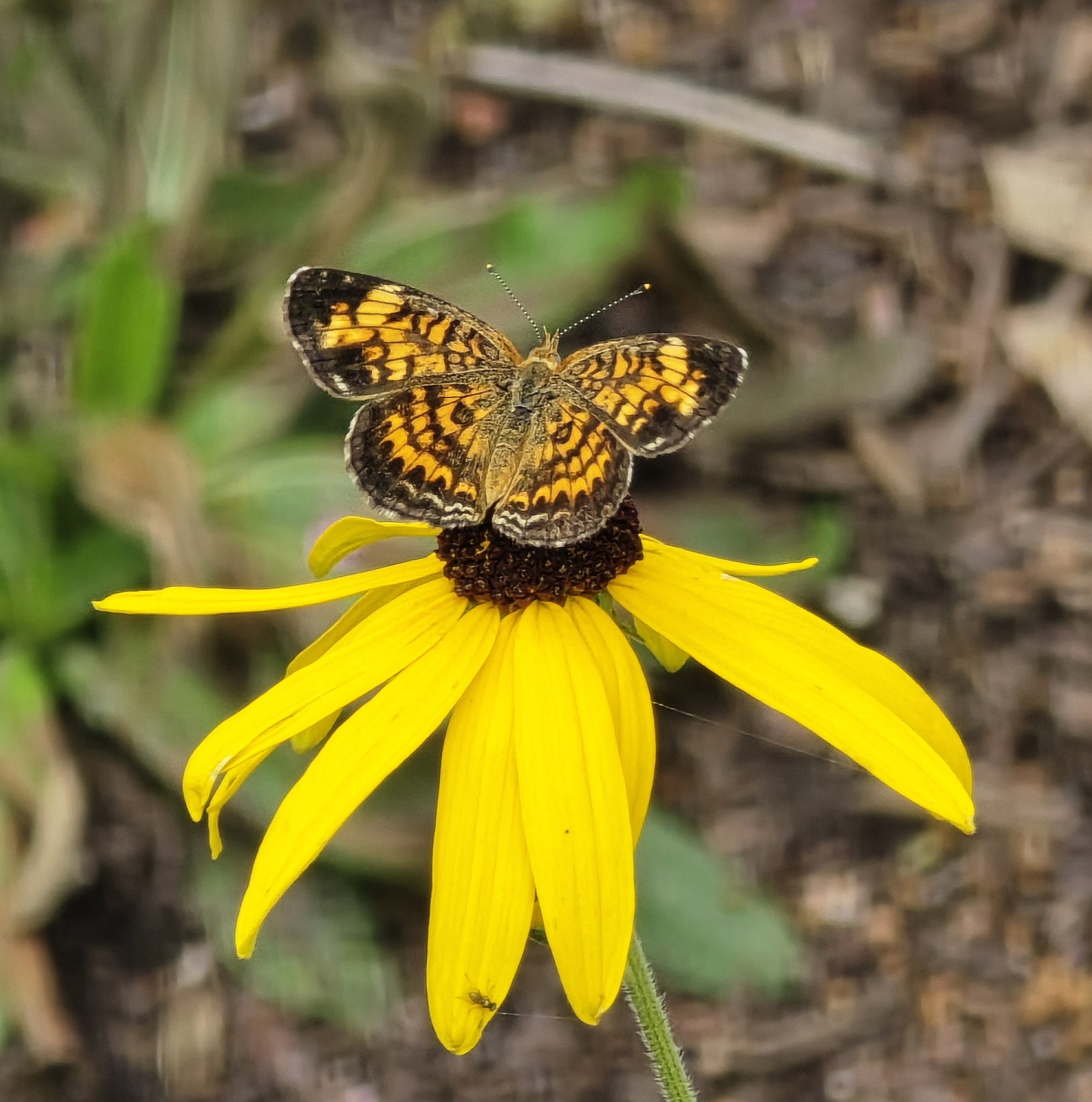
In addition to the caterpillars, this summer we’ve documented over a dozen different species of adult butterflies and moths using our little Pollinator Patch, from zippy, orange-colored skippers to the small but handsome hairstreak and blue butterflies to the large and beautiful adult Monarchs and the glamorous Eastern Tiger Swallowtails.
Our Pollinator Patch supported many other animals beyond butterflies, but telling about those will have to wait for another time. I suspect we could write a book about the native solitary bees, beetles, occasional dragonflies, spiders, solitary hunting wasps, a tree frog, toads, and even a hummingbird that have utilized our small garden so far. And those are just the animals we’ve seen during our few hours on site each week!
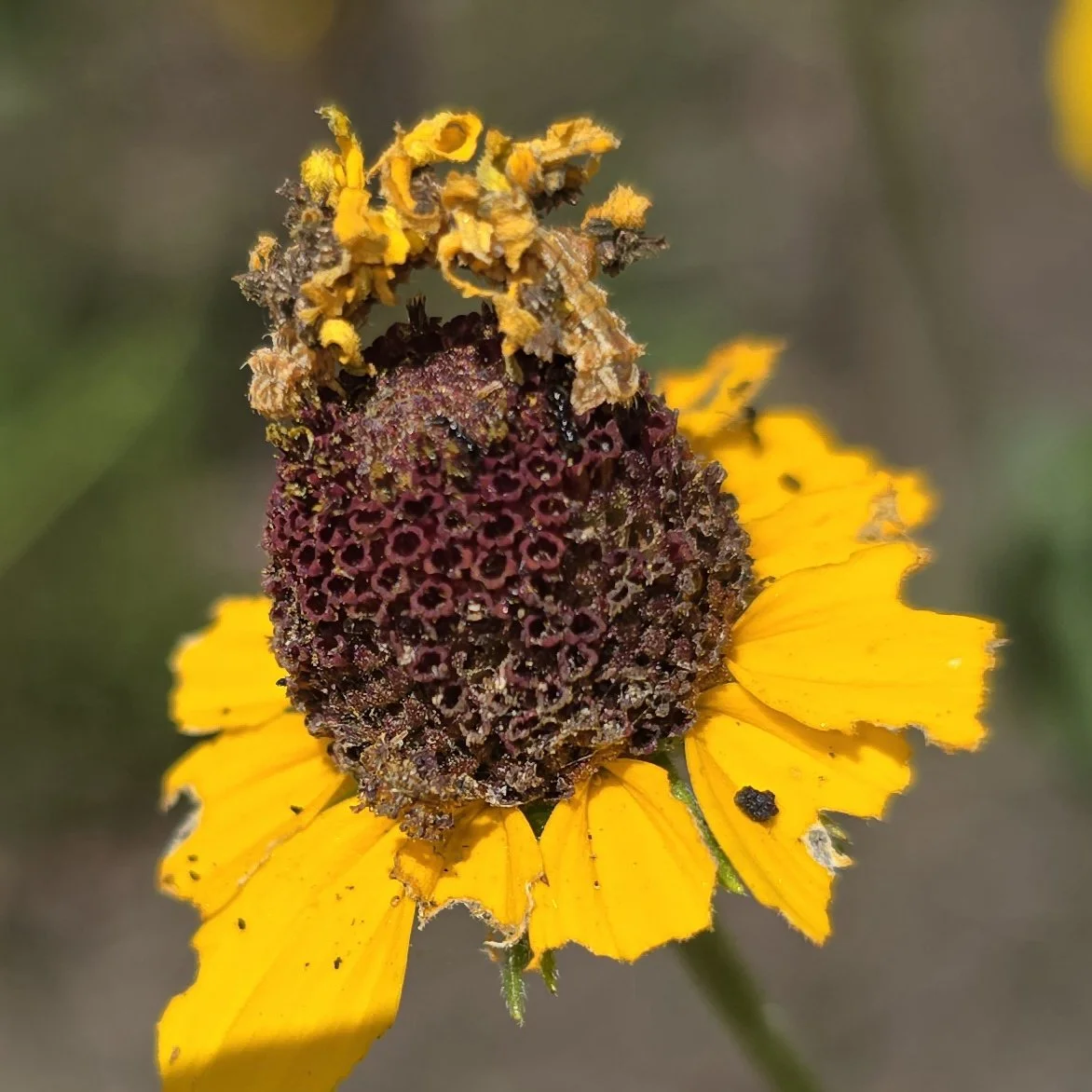
Camouflaged Looper, the caterpillar of a Wavy-lined Emerald moth
All of this took some work, of course. First of all there was clearing the ground and then planting the new plants. Unsurprisingly with bare soil, we’ve also had quite a few weeds that have had to be removed, but the biggest effort has been to keep the plants watered during this first year of establishment in what turned out to be a very dry summer.
We’ve had so much fun with the Pollinator Patch that we’ve started another little pollinator garden in the Courtyard area, next to the Sanctuary.
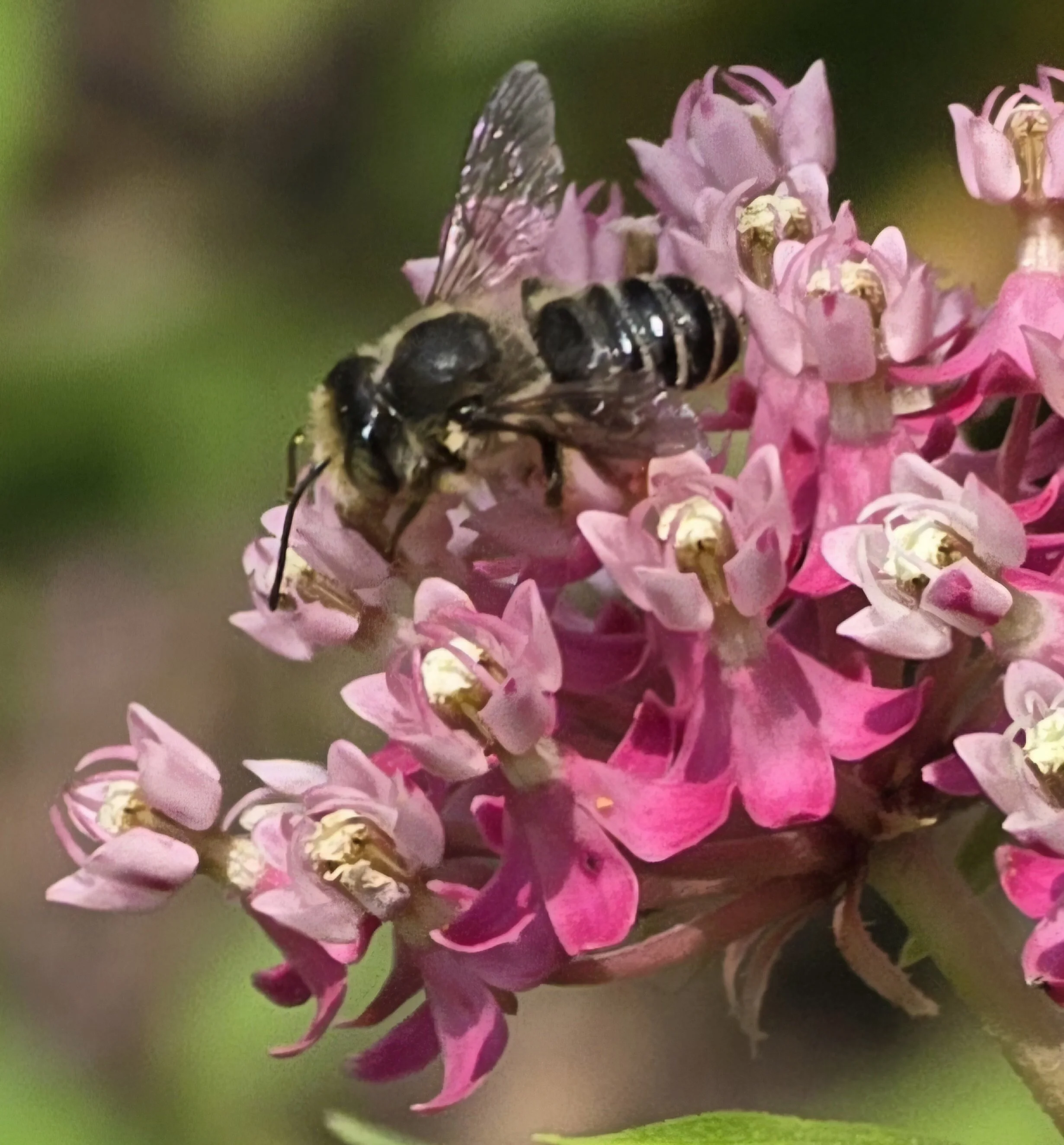
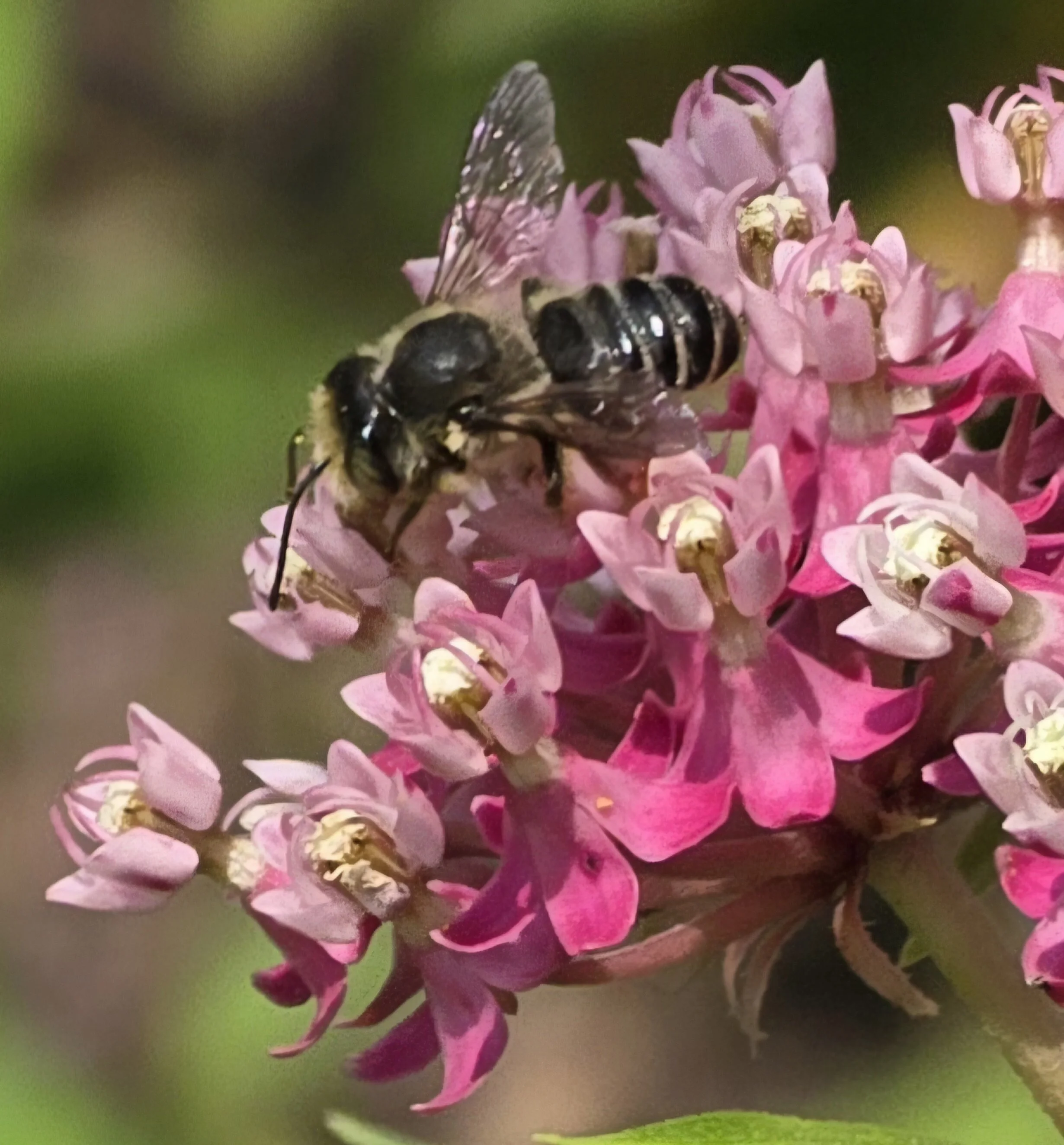
Leafcutter bee & Swamp Milkweed blossom
Now, as fall arrives with its affiliated leaf drop from the deciduous trees, we’ll be mulching the garden with those fallen leaves. This forms a gentle but very important blanket over the soil. Leaf mulch will serve to retain moisture in the soil, will keep the soil from eroding, and will minimize the sprouting of weed seeds. Most importantly, it will provide habitat for a variety of small animals, which will provide food for other animals, and the leaves will slowly decompose, adding organic material and feeding the soil.
We hope that you’ll take some time to stop by and enjoy the Pollinator Patch, if not this fall or winter, then definitely next spring. And be sure to watch as our new little courtyard pollinator bed begins to grow and support even more life. We’ve already had one monarch caterpillar decide it was a good place to finish growing!
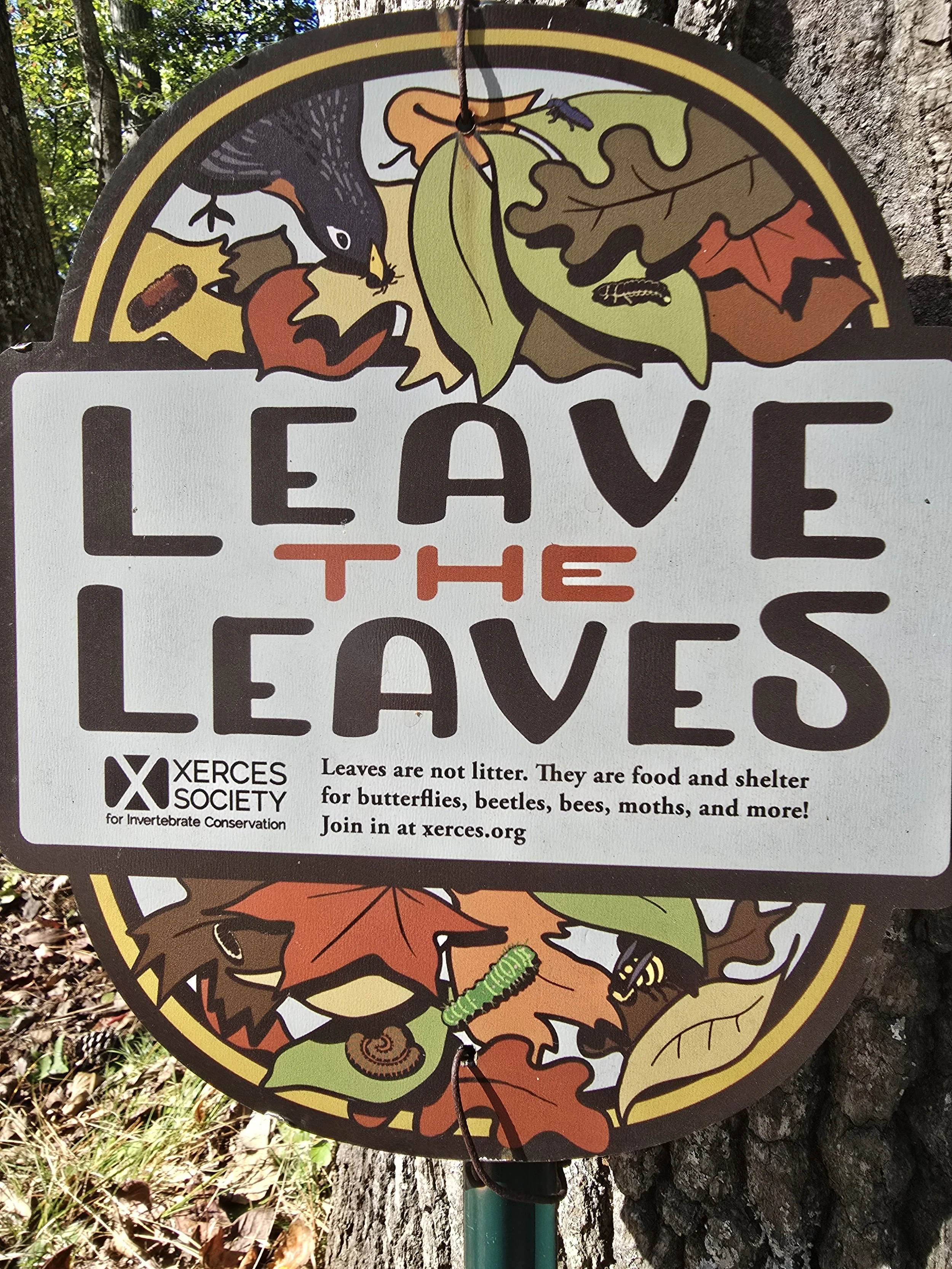
Note: Right now, at WUU and at home, one of the best ways we can all support butterflies and moths (as well as a variety of other animals) is to “Leave the Leaves!” Many butterflies and moths overwinter as pupae, caterpillars, eggs, or even adults in the natural leaf litter. If you bag your leaves and send them to the landfill, you are sending all those baby butterflies and moths along with them.